Category: Travel Tips & Local Guides

Essential insider advice, transit pass hacks, convenience store guides, and local cultural tips for navigating South Korea with ease.

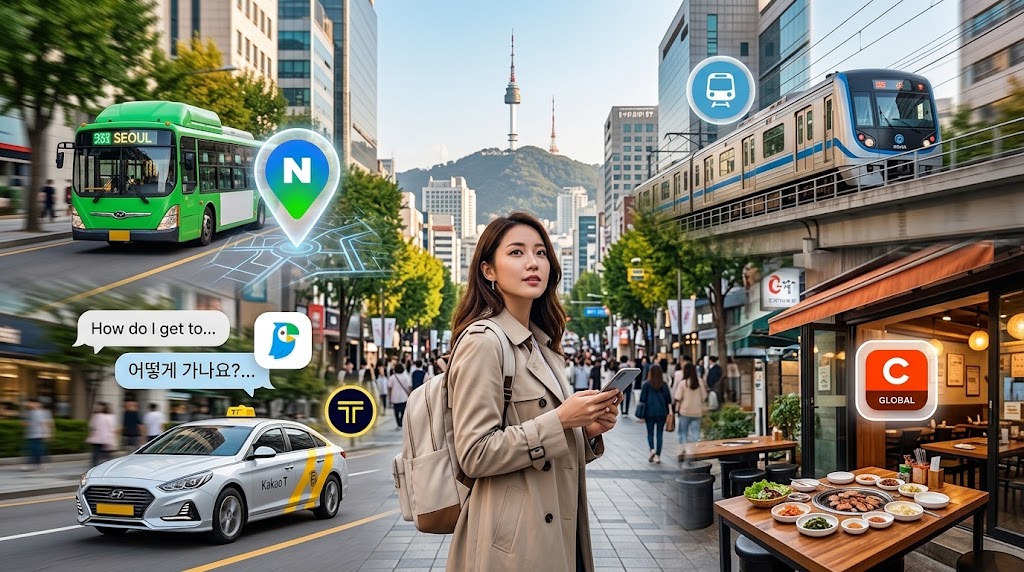
  • 5 Must-Have Apps Before Traveling to Korea: Navigation, Transit, Taxi & Food

    5 Must-Have Apps Before Traveling to Korea: Navigation, Transit, Taxi & Food

    Google Maps lacks accurate walking and transit routes in South Korea due to mapping regulations, and hailing taxis on the street is nearly impossible late at night. Download these 5 local apps before landing to travel like a pro.

    1. Naver Map (Walking GPS & Transit) 🗺️

    Naver Map app icon for South Korea walking directions and public transit GPS

    The essential replacement for Google Maps in South Korea.

    • Turn-by-Turn GPS: Precise pedestrian routes through alleys and subway stations.
    • Live Transit: Real-time bus countdowns and subway schedules in full English.
    • 💡 Pro-Tip: If English search fails, paste the venue’s phone number directly into the search bar to locate it instantly.

    👉 iOS App Store | Google Play

    2. Papago (AI-Powered Live Translation) 🦜

    Papago translation app logo by Naver for English to Korean text and menu photo scan

    Built by Naver, Papago translates Korean with far more natural context than Google Translate.

    • Camera Scan: Point your camera at restaurant menus and signs for instant English overlays.
    • Two-Way Voice: Speak into your microphone for smooth conversations with taxi drivers.
    • 💡 Pro-Tip: Use camera scan on complimentary side dishes (banchan) at K-BBQ spots to check for allergens or spice levels.

    👉 iOS App Store | Google Play

    3. Kakao T (Taxi Hailing Without a Korean Card) 🚕

    Kakao T taxi ride hailing app logo and vehicle in South Korea

    Korea’s Uber. Essential for getting back to your hotel after midnight when subways stop running.

    • Foreign Friendly: Register easily using your international mobile number.
    • No Korean Card Needed: Select “General Taxi” and choose “Pay to Driver” to pay with cash or your foreign Visa/Mastercard.
    • 💡 Pro-Tip: Never pick “Blue” or “Venti” if paying in person—stick strictly to standard General Taxi.

    👉 iOS App Store | Google Play

    4. Subway Korea (Multi-Language Metro Guide) 🚇

    Subway Korea metro transit map app icon for Seoul and Busan subway navigation

    The fastest offline-capable subway map covering Seoul, Busan, Daegu, Daejeon, and Gwangju.

    • Station Numbers: Find stations using unique 3-digit numbers (e.g., #201 City Hall) without struggling with Korean pronunciation.
    • Fast Transfers: Displays the exact carriage door (e.g., Door 4-2) for the quickest line transfer.
    • 💡 Pro-Tip: Check the 3-digit station number on platform signs to confirm your train is moving in the correct direction.

    👉 iOS App Store | Google Play

    5. Catchtable Global (Dining Reservations & Waitlists) 🍽️

    Catchtable Global dining reservation app icon for restaurant waitlists in Korea

    The dedicated English platform to reserve trending dining spots and skip massive physical lines.

    • No Korean ID Needed: Book viral dining spots and K-BBQ using your regular international email.
    • Remote Queuing: Join digital waitlists from your phone before arriving at popular cafes in Seongsu or Hongdae.
    • 💡 Pro-Tip: Open the app 30 to 45 minutes before peak meal times to join remote queues, saving an hour of waiting outside.

    👉 iOS App Store | Google Play

    👑 Editor’s VIP Pick: Private Seoul & Suburbs Car Charter

    Traveling with family, seniors, or a small group? Skip the crowded subways and customize your own Seoul day trip—from Gyeongbokgung Palace to Nami Island—in a comfortable private vehicle with a dedicated local driver.

    💡 Editor’s VIP Transit Tip: Incheon Airport Private Van Transfer

    If you are arriving late at night, traveling with family, or carrying bulky luggage, navigating crowded subways can be exhausting. A Private Airport Transfer offers a dedicated driver waiting at the arrivals hall to take you directly to your hotel doorstep with zero transfer hassle.
  • How to Buy a Korea Transit Card: T-Money vs Climate Card vs WOWPASS

    How to Buy a Korea Transit Card: T-Money vs Climate Card vs WOWPASS

    Navigating public transit in South Korea is fast, clean, and efficient, but foreign travelers often get confused by the different transit cards available. 🚇

    Here is a straightforward local guide comparing the three best transit cards in Korea, how much they cost, and where to buy them.

    1. T-Money Card: The Classic All-Rounder

    Official T-Money travel transit card featuring a traditional Korean palace illustration for foreign tourists in South Korea

    The T-Money card is Korea’s traditional rechargeable transportation card, accepted nationwide on subways, buses, and taxis.

    • Card Cost: 3,000 – 5,000 KRW (card only; balance charged separately)
    • Best For: Travelers visiting multiple cities (e.g., Seoul + Busan + Jeju)
    • Where to Buy: Any convenience store (CU, GS25, 7-Eleven, Emart24) or subway station ticket machines.
    • How to Reload: Cash only (KRW) at subway kiosks or convenience store counters.
    • Key Feature: Can also be used to pay for small purchases at convenience stores and vending machines.

    💡 Editor’s Practical Tip: Pick Up at the Airport Without Cash

    Subway card vending machines in Korea often require physical Korean Won cash. To avoid the hassle of finding a currency exchange counter right after landing, order your Pre-loaded T-Money Card online in advance. You can conveniently pick it up at the Incheon Airport arrivals hall counter in just a few minutes.

    * We may earn a small affiliate commission at no

    2. Seoul Climate Card (Tourist Pass): Best for Unlimited Rides

    Official Seoul Climate Card tourist transit passes featuring the cute Seoul city mascot Haechi for unlimited subway and bus rides

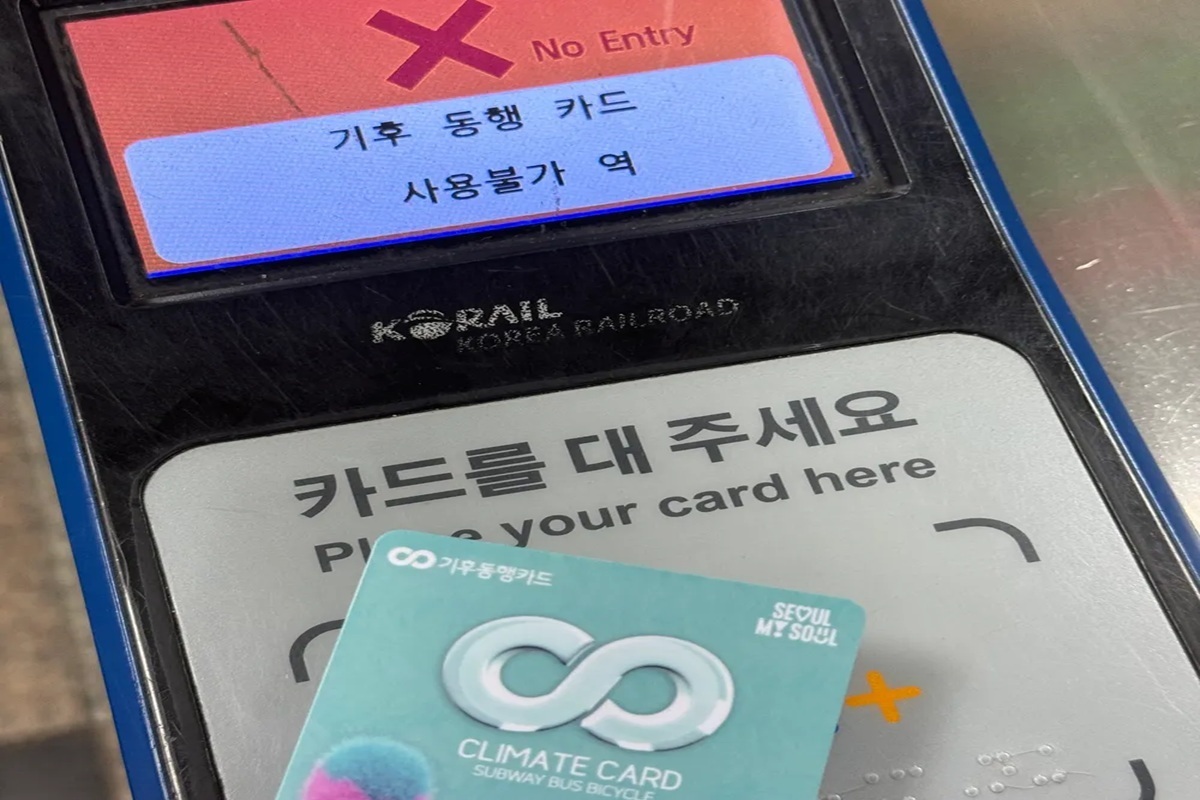
    Launched by the Seoul City Government, the Climate Card Tourist Pass (기후동행카드) offers unlimited subway and bus rides within Seoul for a fixed daily rate.

    • Pass Options & Pricing:
      • 1-Day Pass: 5,000 KRW (~$3.70 USD)
      • 2-Day Pass: 8,000 KRW (~$6.00 USD)
      • 3-Day Pass: 10,000 KRW (~$7.50 USD) (Most Popular!)
      • 5-Day Pass: 15,000 KRW (~$11.20 USD)
    • Best For: Travelers staying mainly in Seoul taking more than 3–4 transit trips per day.
    • Where to Buy: Subway station customer service centers (Lines 1–9, Ui-Sinseol Line) and major convenience stores near stations.
    • Coverage: Unlimited rides on Seoul subway lines and city buses (Note: Does not cover Airport Railroad Express AREX non-stop trains or taxis).

    3. WOWPASS: The Ultimate All-in-One Card for Tourists

    A traveler holding a WOWPASS prepaid debit and T-Money card in front of an automated currency exchange kiosk in Seoul

    WOWPASS is a prepaid debit card designed exclusively for foreign visitors, combining a cashless shopping card with a built-in T-Money transit chip.

    • Card Fee: 5,000 KRW
    • Best For: Travelers who want cashless card payments across Korea without exchange fees.
    • Where to Buy: Dedicated orange WOWPASS kiosks located at Incheon Airport (T1/T2), Gimpo Airport, Seoul Station, Myeongdong, and Hongdae.
    • Top-Up: You can insert 16 foreign currencies (USD, JPY, EUR, TWD, etc.) directly into the kiosk to load Korean Won.
    • Dual Balance: The debit balance pays at cafes/shops, while the T-Money chip covers subways and buses.

    💡 Local Insider Hacks (Must-Know Tips)

    South Korean Won banknotes in denominations of 50000, 10000, 5000, and 1000 KRW cash used for reloading transit cards in Seoul
    • ⚠️ Cash Is Still King for Transit: While credit cards work everywhere in Korean shops, traditional T-Money cards can only be recharged with physical Korean cash. Keep 20,000–30,000 KRW cash in your wallet!
    • 📱 Download Naver Map: Google Maps does not support walking navigation in South Korea due to local spatial data laws. Download Naver Map (English available) for accurate subway transfer routes and exit numbers.
    • 🔄 Always Tap Out: Always tap your card on the reader when exiting both subways and buses to avoid transfer penalties.

    Quick Summary: Which Card Should You Choose?

    • If you are staying only in Seoul for 3–5 days ➔ Seoul Climate Card (Unlimited rides save the most money).
    • If you want cashless shopping + transit in one card ➔ WOWPASS (No exchange fees, app tracking).
    • If you are traveling nationwide (Busan, Gangwon, Jeju) ➔ T-Money Card (Universal coverage across South Korea).

    💡 Editor’s 2-in-1 Smart Hack: Free T-Money with Unlimited Data

    You will definitely need reliable mobile data to navigate Naver Map and Papago in Korea. Instead of buying a transit card and a SIM card separately, pick up the LG U+ Unlimited 4G/5G SIM—it comes with a Free Physical T-Money Card included. Grab it at Incheon Airport and you are instantly set for both data and transit.

    💡 Editor’s Transit Tip: Skip the Commuter Rush

    Taking the regular all-stop train with heavy luggage can be exhausting, especially during Seoul’s rush hours. For a hassle-free arrival, book the AREX Non-Stop Express Train—it gets you from Incheon Airport to Seoul Station in just 43 minutes with reserved seating and dedicated luggage racks.

    * We may earn a small affiliate commission at no extra cost to you.